 ‹ All Blogs
Credit Union LOS Buyer's Guide: 10 Questions to Ask Before Choosing a Loan Origination System
Every lending leader who has sat through three vendor demos in a single week kno...

Every lending leader who has sat through three vendor demos in a single week knows the problem. Each platform looks polished on stage. Each sales deck promises faster approvals, happier members, and a shorter path to funding. And yet six months after signing, plenty of credit unions find themselves stuck with a system that never quite does what the demo showed.
The gap between a good pitch and a good fit is where most of these deals go wrong. This guide exists to close that gap. Below are the 10 questions worth asking every vendor before you sign anything, along with the answers that separate a system built to last from one that just wins the room.

- Does it truly integrate with our core, or just claim to?
- Is it actually cloud based, or a legacy system with a new coat of paint?
- How much can our own team configure without filing a support ticket?
- Can it originate more than one loan and account type today, and grow into more later?
- What does the AI actually decide, and can anyone explain why?
- What is the member and staff experience like outside a scripted demo?
- What security and compliance evidence can they hand you right now?
- What does implementation look like, week by week?
- What is the true cost once every module you'll actually need is added in?
- Who is on your team after the contract is signed
Strip away the marketing language and a loan origination system, or LOS, is the software that carries an application from the first click to funded money. It handles intake, verification, decisioning, documentation, and disbursal, and for many credit unions today it also covers digital account opening, since a new member and a new loan often arrive through the same front door.
Your core system is the system of record. It holds the account once it exists. The LOS is the engine that gets the account and the loan to that point in the first place, and increasingly, it is where members form their first real impression of your credit union.
A regional bank with a technology budget in the tens of millions can absorb a bad software decision. Most credit unions cannot. Your team is smaller, your members expect to be treated like owners rather than accounts, and your board is asking hard questions about the cost of falling behind fintech competitors that never sleep and never close a branch.
Add in the fact that an NCUA examiner will eventually ask how you vetted this vendor, how you tested the model for fair lending risk, and how you documented that testing, and the stakes look different than they do for a bank writing the same check. A modern LOS is no longer a back office convenience. It is a decision your members, your board, and your regulator will all eventually feel.
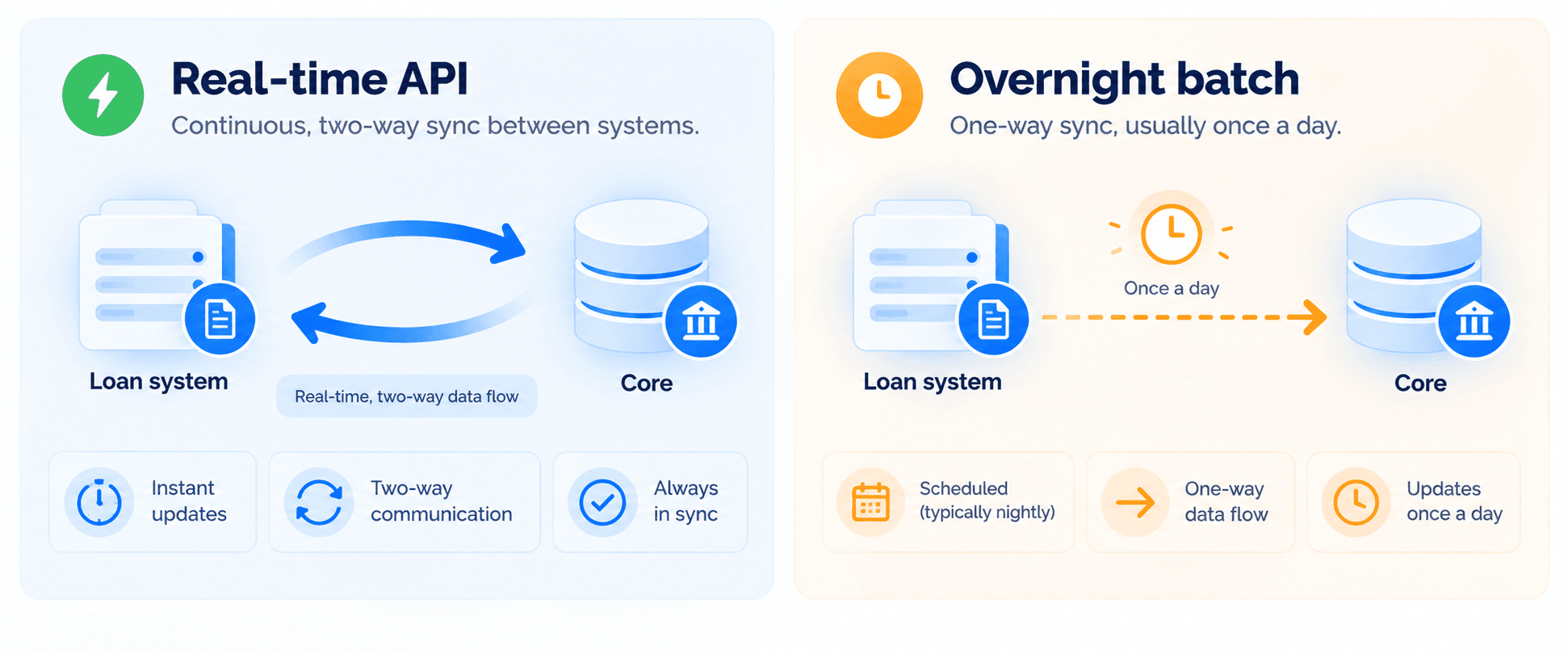
Almost every vendor will say yes when you ask about integration. The real question is what "yes" means. Some platforms connect through a documented, real time API. Others rely on an overnight batch file that syncs once a day, which sounds fine until a member calls at 2 p.m. asking why their new loan isn't showing up yet.
Ask for the names of credit unions currently live on your specific core, not just a general list of partners. Ask what breaks first when the core provider pushes an update. A vendor who answers quickly and specifically has done this integration before. A vendor who gets vague has not.
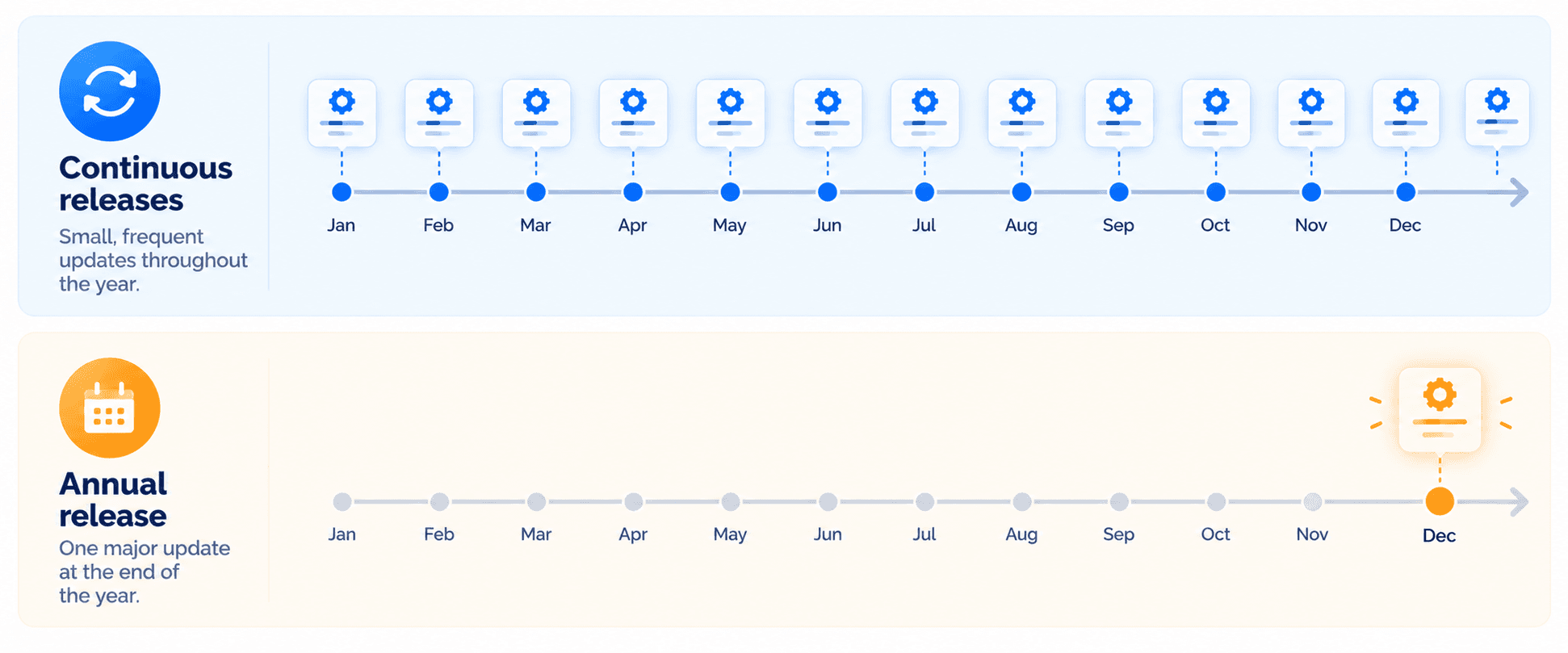
Plenty of older platforms have been relabeled as cloud software without changing much under the hood. The distinction matters because it determines how often you get new features, how painful upgrades are, and how well the system scales as your loan volume grows.
Ask how updates are delivered. A genuinely cloud native, multi tenant platform pushes improvements continuously, often without you noticing until a new feature shows up. A system built on older architecture tends to batch changes into a large, disruptive annual release. Ask what the last update actually changed and how much notice you got.
Your credit union's lending policy is not identical to the one down the street, and your LOS should not force you to pretend otherwise. Ask to see, live, how a business user (not a developer) changes a decision rule, adds a new document requirement, or adjusts a workflow step.
If every small change requires a change order and a two week wait, that cost will compound every time your credit committee updates policy. A platform with real self serve configuration pays for itself the first time a rate sheet changes on short notice.
Auto loans, personal loans, credit cards, home equity, and even new member and deposit accounts often live in separate systems that were never designed to talk to each other. That fragmentation is exactly what pushes many credit unions to shop for something new in the first place.
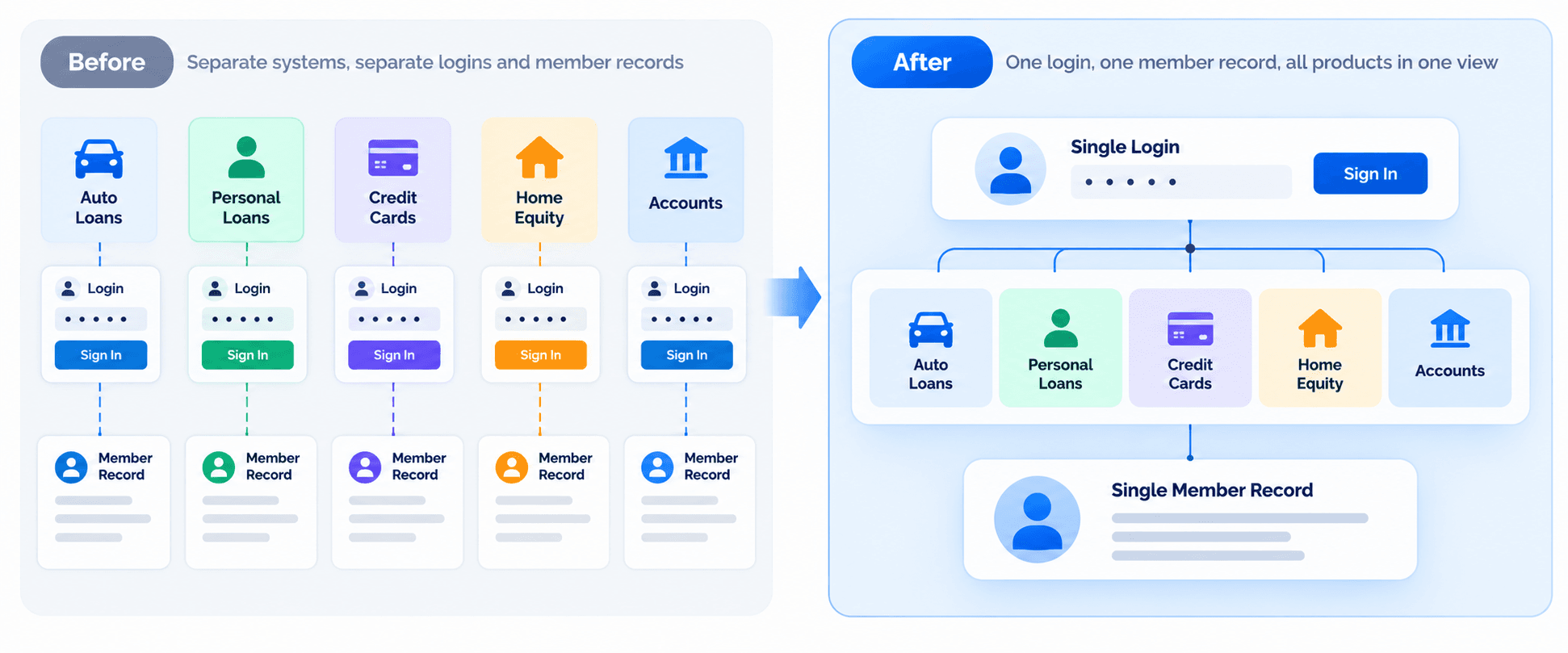
Ask what is included today versus what is on the roadmap. Ask when the last major loan type was added to the platform and how that rollout went for existing clients. A system built to originate loans and accounts under one roof gives your team one login, one member record, and a real shot at cross selling without extra manual work.
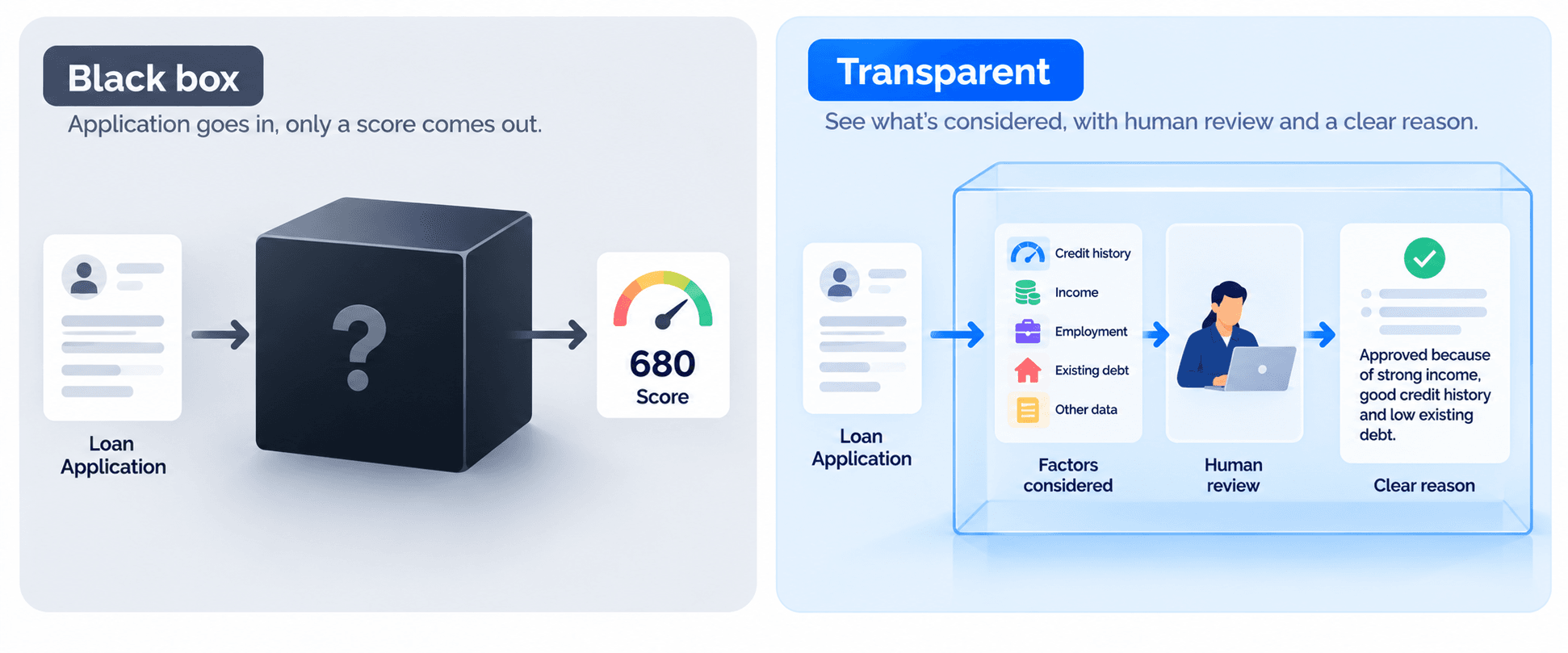
AI is now standard language in every lending pitch, but the details matter enormously here. Ask exactly where AI or automation touches a decision: document reading, income verification, fraud screening, credit risk scoring, or the underwriting call itself.
Then ask the harder question. If a member is declined, can the system produce a clear, specific adverse action reason, the kind that satisfies Regulation B and an examiner's checklist? Ask about human review options, how the model was tested for disparate impact, and how often it gets retrained. A vendor that welcomes this line of questioning is confident in what they built. One that changes the subject is worth a second look.
A sales demo is choreographed. Ask instead for a sandbox login you can click through yourself, or better, a working reference call with a credit union close to your own asset size. Have someone on your team actually apply for a loan on a phone, not just a laptop, since that is how a growing share of your members will do it.
On the staff side, sit an actual loan officer in front of the platform, not just a manager. The people who will use this software eight hours a day are the best judges of whether it saves time or just moves the friction somewhere else.
Every vendor claims to take security seriously. Ask for the specifics: a current SOC 2 report, encryption standards for data at rest and in transit, role based access controls, and a documented breach notification process. Ask how granular the audit trail is, since "who changed what and when" is exactly what an examiner will want to see during a review.
None of this should require a follow up email two weeks later. A mature vendor keeps this documentation ready to share the moment you ask.
"Six to eight weeks" is not a plan, it is a guess dressed up as a timeline. Ask for an actual project plan with named milestones: data migration, integration testing, staff training, a pilot period, and go live. Ask who owns each step on the vendor's side and who from your team needs to show up and when.
Ask specifically how long implementation took for a credit union close to your size on your core system. A vendor with real answers here has done this enough times to know exactly where the bottlenecks tend to show up.
The number on the first proposal is rarely the number you end up paying. Licensing, per seat fees, integration charges, ongoing maintenance, and "premium" AI or analytics add ons can turn a modest quote into something very different once your full requirements are in the mix.
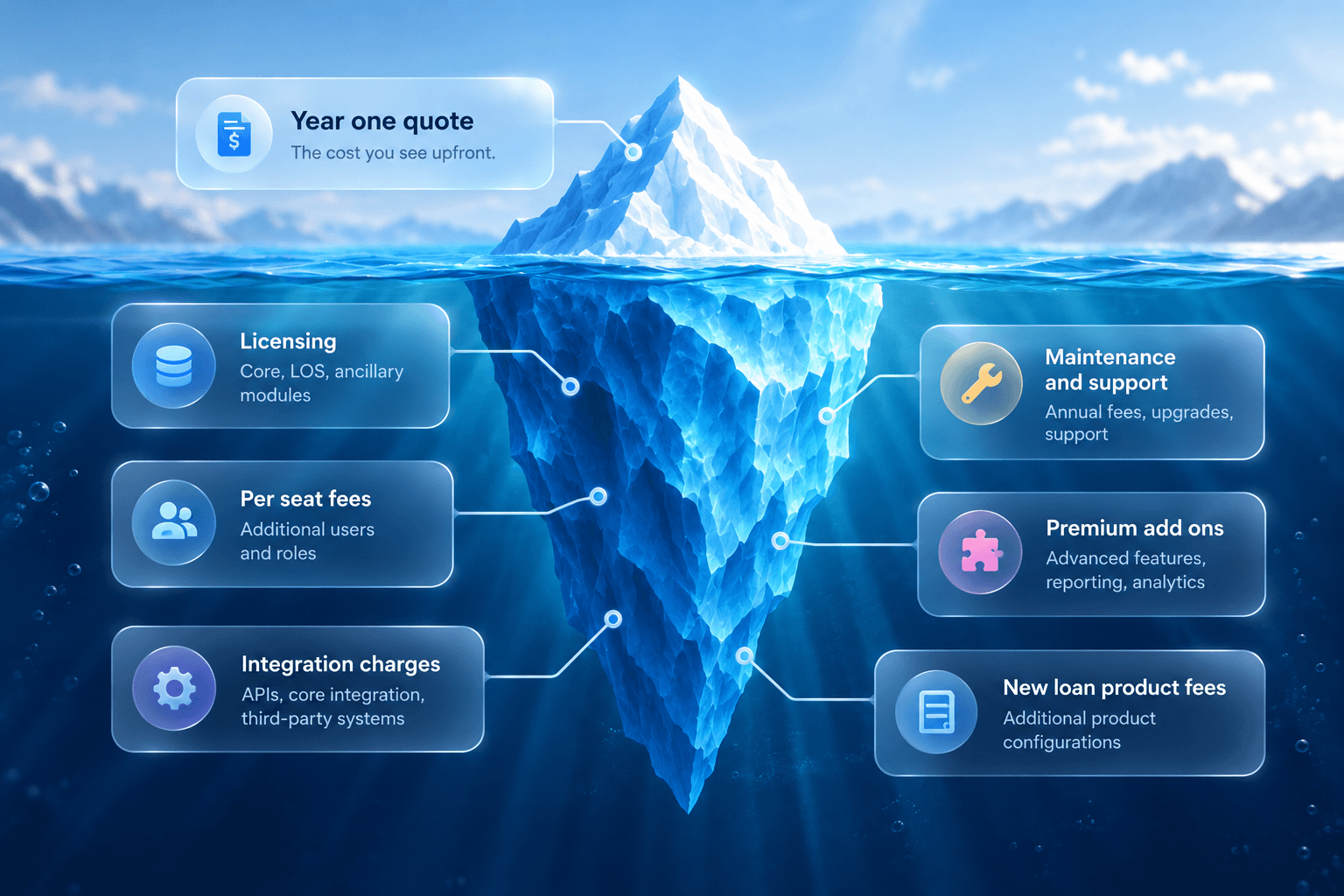
Ask for a three year total cost, not just a year one figure, and ask specifically what it costs to add a new loan product or channel later. A vendor confident in their pricing will walk through this with you without hesitation.
The relationship that matters most starts the day after go live, not the day you sign. Ask whether you get a named success manager or a general support queue. Ask how often the product roadmap gets updated, and whether customer requests actually show up in new releases.
A good way to test this: ask what shipped in the last three product updates, and whether existing clients asked for any of it. The answer tells you whether you are buying a static product or joining a platform that keeps improving around you.
- Core integration: real time API or overnight batch file?
- Architecture: continuously updated cloud platform or relabeled legacy system?
- Configurability: can your own team change rules, or does every tweak need a ticket?
- Coverage: one platform for multiple loan and account types, or several bolted together?
- AI transparency: clear adverse action reasoning and documented bias testing?
- Experience: verified with a sandbox login and a peer reference, not just a demo?
- Security: current SOC 2 report and a detailed audit trail, ready on request?
- Implementation: a named, week by week plan, or a vague estimate?
- Cost: a full three year total, or a headline number that grows later?
- Support: a named success manager, or a ticket number?
We built Algebrik with this exact checklist in mind, mostly because our team has sat on the other side of these vendor conversations and knows how often the sales pitch and the delivered product drift apart.
was designed as a cloud native suite from the start, not a legacy platform rebuilt with a newer interface, which speaks directly to question two above. Digital account opening, document processing, point of sale, borrower communication, decisioning, member verification, application management, and portfolio analytics all live on one platform rather than as separate tools stitched together after the fact, which answers question four for credit unions juggling more than one loan or account type. Our is built to support explainable outcomes rather than a black box score, which is exactly what question five is really asking about. And our advisory board includes former credit union and bank executives who shape the roadmap based on what lenders actually run into, which is our answer to question ten.
None of this replaces doing your own homework across every vendor on your shortlist, including us. But if you want a second set of eyes on how your finalists stack up against these 10 questions, that is precisely the conversation our team has on a demo call. You can see the full platform, browse more lending resources, or or Visit the
There is no single loan origination system that is right for every credit union, and any guide that claims otherwise is selling something. What you can control is asking sharper questions than the vendor expects, verifying every claim instead of taking a slide at face value, and picking the partner who answers honestly even when the honest answer isn't flattering.
The credit unions that get this decision right treat it less like a purchase and more like hiring a long term employee: one that touches nearly every member relationship you have. Ask these 10 questions, take good notes, and let the answers, not the demo, make the final call.
Frequently Asked Questions
How long does it take to implement a new loan origination system at a credit union?
Timelines vary widely based on how many loan types you're launching, how complex your core integration is, and how much of your workflow you're customizing. Simple, single product rollouts can go live in a matter of weeks, while a full suite replacement with multiple integrations often runs a few months. Always ask a vendor for a plan built around your specific setup rather than a generic industry average.
What does a loan origination system typically cost?
What's the difference between a loan origination system and a core banking system?
Can a smaller credit union afford a modern, AI powered loan origination system?
Do we need to replace our core system to switch loan origination systems?
Ready to get started?
More Blogs

Blog
Computerized Loan Origination: How Technology Transformed Lending

Blog
Loan Origination System Requirements: A Checklist Before You Buy

Blog
Consumer Finance Systems: Why Unified Platforms Win Over Fragmented Stacks