 ‹ All Blogs
Consumer Finance Systems: Why Unified Platforms Win Over Fragmented Stacks
Have you ever tried to figure out your total monthly budget, only to find yourse...

Have you ever tried to figure out your total monthly budget, only to find yourself logging into a banking app, a credit card portal, and Venmo just to get one number? That exhausting "math headache" is the result of relying on a fragmented stack of disconnected tools. Your daily financial friction isn't your fault; it is a software issue buried deep within the invisible plumbing of consumer finance systems.
Industry data reveals that the average consumer juggles several isolated apps. Managing this fragmented financial data forces you to do the heavy lifting yourself. Fortunately, a better approach exists to help you escape this endless log-in loop. Unified platforms serve as a master control center for your personal finance software, finally forcing all your money to speak one simple language.
For years, lenders expanded their technology ecosystems by layering solutions on top of existing systems. A CRM for borrower engagement. A standalone decision engine for underwriting. Separate onboarding platforms. Independent verification vendors. Third-party analytics tools. Point solutions for document processing, servicing, fraud detection, collections, and compliance.
Individually, many of these systems solved specific problems.
Collectively, they created operational fragmentation.
Today, that fragmentation is becoming one of the biggest barriers to lending efficiency, borrower experience, and scalable growth.
As consumer lending volumes rise and borrower expectations evolve, lenders are increasingly realizing that disconnected consumer finance software stacks cannot keep pace with modern operational demands. Unified consumer finance systems are beginning to replace fragmented architectures because they offer something legacy environments struggle to deliver: operational continuity.
The Kitchen Key Problem: Why Fragmented Apps Make Your Life Harder
Imagine walking into your kitchen for breakfast, but every single drawer requires a unique key to open. That exhausting routine is exactly what managing money across multiple apps feels like. Behind the scenes, the collection of software your bank uses to run these apps is called a "tech stack."
When these background tools don't communicate, your information gets trapped in isolated bubbles. Experts call these disconnected databases data silos in financial services. It operates like a clumsy assembly line where details constantly fall off the belt; your checking account doesn't know what your credit card is doing, leaving you to connect the dots.
A broken stack wastes your time in three distinct ways:
- Re-typing your home address whenever you open a new account.
- Waiting days for simple transfers between your own accounts to clear.
- Doing manual math across multiple screens just to find your actual balance.
Fortunately, unified consumer lending solutions are finally fixing this messy plumbing, making loan applications instant instead of agonizing.
The pressure on lenders is growing from multiple directions simultaneously.
Consumer credit demand continues to expand across several lending categories. According to TransUnion’s Q1 2026 Consumer Credit Industry Insights report, unsecured personal loan originations surged more than 20% year-over-year entering 2026.
Home equity activity also continues rising. HELOC originations increased 15.8% year-over-year in Q3 2025, while overall home equity originations grew 14.3%.
At the same time:
- Household debt reached $18.8 trillion in Q1 2026.
- Auto lending affordability pressures continue intensifying.
- Delinquencies remain elevated across several lending categories.
- Borrowers increasingly expect real-time digital experiences.
This creates a difficult operational balancing act for lenders.
They must:
- Originate loans faster
- Improve borrower experience
- Maintain compliance rigor
- Reduce operational costs
- Manage rising risk complexity
- Support omnichannel engagement
- Adapt products dynamically
Fragmented lending systems struggle under this level of operational pressure.
The Invisible Tax: How Broken Systems Slow Down Your Loans and Security
Getting a loan often takes days, even though your bank already knows your income. When banks rely on disconnected consumer lending software, they must manually translate your information between departments. Think of it like playing the game of telephone: every time your file moves from the credit check team to the income review team, a slow translator has to rewrite the message. This operational complexity creates an invisible tax on your time, turning a quick "yes" into a stressful waiting game.
Beyond wasting your afternoon, the true total cost of ownership for these messy systems is paid in your privacy. The risks of fragmented financial data are like having ten different doors to your house—it simply gives thieves more locks to pick. Modern banking fixes this through "real-time data orchestration," which just means a secure digital bridge instantly shares your information exactly where it’s needed without exposing it along the way.
Consolidating your information away from these broken systems delivers immediate safety upgrades:
- Fewer login points for you to manage and protect.
- Real-time fraud detection that spots suspicious activity instantly across all balances.
- Faster updates that apply security patches everywhere, eliminating blind spots.
We ran the surveys and one finding was telling- Fragmentation usually happens gradually.
A lender adopts one system to solve onboarding. Another for decisioning. Another for indirect lending. Another for analytics. Another for document verification. Over time, integrations become brittle, workflows become inconsistent, and operational teams begin compensating manually.
The result is what many institutions experience today:
- Duplicate borrower data
- Manual handoffs
- Repeated document requests
- Disconnected borrower journeys
- Delayed approvals
- Limited operational visibility
- Inconsistent underwriting workflows
- Higher servicing overhead
- Integration maintenance complexity
These inefficiencies compound over time.
Every disconnected workflow introduces latency. Every manual reconciliation creates operational risk. Every fragmented borrower touchpoint increases abandonment probability.
The problem becomes even more severe as lenders scale across products and channels.
Consumer lending today is no longer confined to branch-originated applications. Borrowers move fluidly between mobile, web, indirect, embedded, and assisted channels. Legacy architectures built around siloed systems struggle to maintain continuity across these environments.
The Unified Platform: Your Financial Life's New 'Control Center'
Think about how a smartphone replaced your separate camera, map, and music player. A unified fintech platform does the exact same thing for your wallet by acting as a master control center. Instead of scattering your balances across apps that never talk, it creates a "Single Source of Truth." This ensures your checking, savings, and credit accounts always reflect the same centralized financial data instantly, eliminating the headache of logging into five different websites just to find your total net worth.
Making these seamless connections requires a digital handshake known as an API. Picture an API as the bumps on a LEGO brick that let two completely different pieces snap together perfectly. By using API-first core banking, institutions build your financial tools with these universal blocks. It allows your favorite budgeting app to instantly shake hands with your bank account without requiring constant, manual updates.
Having a perfectly synced budget becomes effortless when this information flows without friction. Because your apps never wait overnight for a slow translator to update your balances, you know exactly what you can spend before buying your morning coffee.
From Weeks to Minutes: The Real-World Payoff of Integrated Lending
Applying for a mortgage or personal loan used to feel like a tedious part-time job. Today, an omnichannel consumer loan lets you start applying on your phone and finish on your laptop. The process never restarts just because you changed screens, eliminating borrower fatigue entirely.
This magic happens because modern lenders rely on unified banking stacks equipped with automated compliance- built-in digital rule-checkers that safely verify your identity in seconds rather than days. Notice the dramatic difference in your borrowing journey:
- Before: Weeks of tracking down printed pay stubs and waiting for slow, manual reviews.
- After: Instant decisions because seamlessly connected systems securely verify your financial history upfront.
Financial institutions are eagerly making this system upgrade for a very simple reason: improving customer experience is the best way to win your long-term loyalty.
Borrower Experience Improves When Systems Become Invisible
One of the clearest advantages of unified lending systems is borrower experience consistency.
Borrowers rarely think about the technology stack behind a lending experience. They simply experience the friction.
They notice when:
- Information must be entered repeatedly
- Status updates are unclear
- Documents are requested multiple times
- Applications restart between channels
- Communication becomes inconsistent
- Approvals take too long
In fragmented environments, these issues are common because systems often lack contextual continuity.
Unified consumer finance software reduces this friction by maintaining workflow intelligence across the entire lending lifecycle.
That continuity enables:
- Faster approvals
- Personalized borrower journeys
- Real-time application visibility
- Omnichannel consistency
- Smarter communication workflows
- Reduced abandonment
- Lower operational dependency on manual intervention
As digital-native borrowers increasingly dominate lending markets, these experience advantages become competitive differentiators rather than operational luxuries.
AI Performs Better Inside Unified Lending Environments
AI adoption is accelerating across consumer lending.
But AI effectiveness depends heavily on workflow visibility and data continuity.
In fragmented environments, AI systems often operate with incomplete operational context because data is scattered across disconnected applications.
Unified consumer finance systems provide a stronger foundation for intelligent automation because they centralize workflow intelligence.
This enables AI to support:
- Automated underwriting assistance
- Fraud detection
- Dynamic workflow routing
- Borrower intent prediction
- Next-best-action recommendations
- Risk prioritization
- Portfolio monitoring
- Compliance anomaly detection
Importantly, the value is not just automation.
The value is orchestration.
Modern lending operations increasingly require systems capable of adapting workflows dynamically based on borrower behavior, risk signals, operational bottlenecks, and portfolio conditions in real time.
That level of operational coordination becomes difficult inside fragmented architectures.
Operational Agility Is Becoming a Competitive Advantage
One of the biggest shifts happening across lending technology is the growing importance of adaptability.
Markets are changing faster.
Borrower behavior is changing faster.
Risk environments are changing faster.
Product strategies are changing faster.
Lenders operating on rigid legacy systems often struggle to adapt quickly because every workflow modification requires coordination across multiple vendors, integrations, and operational dependencies.
Unified lending platforms reduce this complexity.
Modern cloud-native consumer finance systems increasingly allow lenders to:
- Launch products faster
- Modify workflows dynamically
- Adjust underwriting rules rapidly
- Deploy integrations more efficiently
- Expand across channels more easily
- Improve operational visibility continuously
That agility matters because competitive advantage in lending is increasingly tied to operational responsiveness rather than simply product availability.
Your Financial Spring Cleaning: How to Audit Your Own Apps
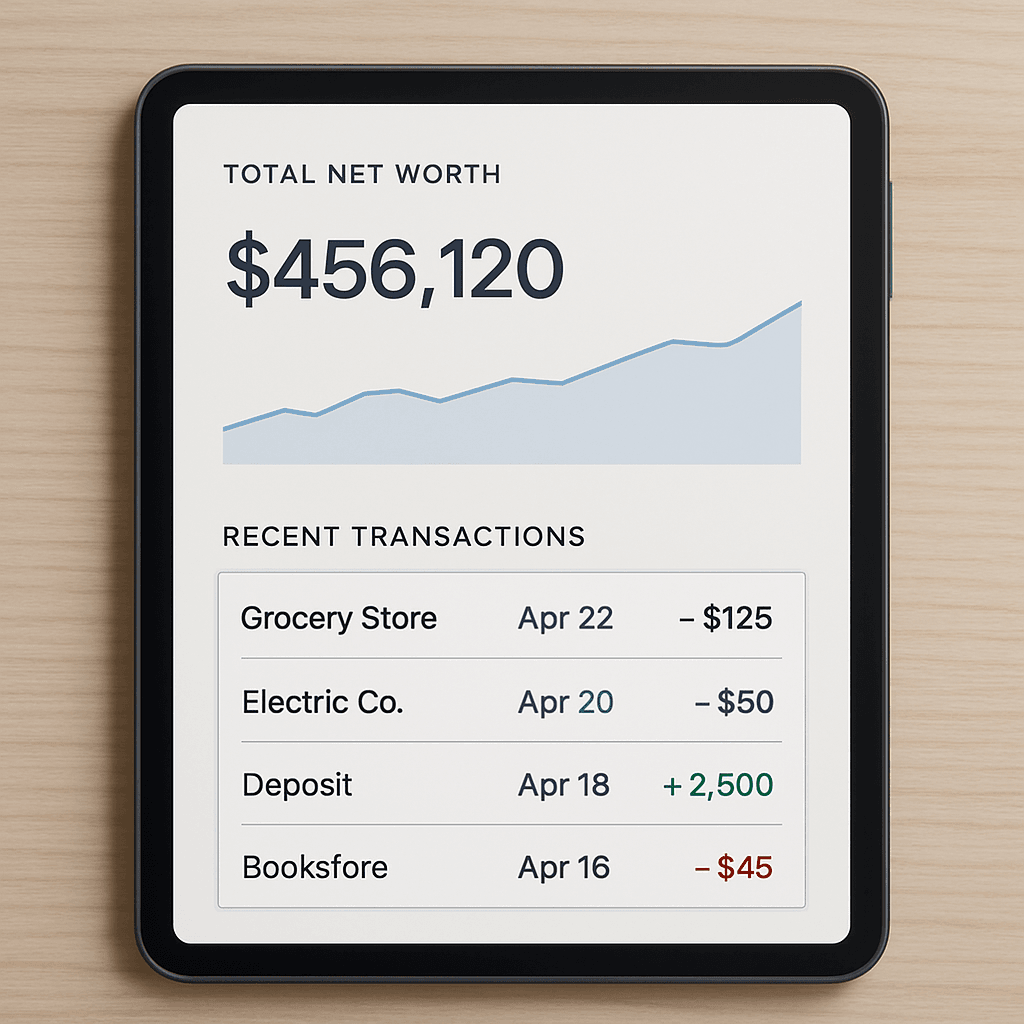
If your digital wallet feels scattered, grab your phone and try this three-minute personal finance software audit:
- Identify duplicates: Delete extra apps doing the exact same job.
- Check integrations: Ensure your remaining accounts connect easily.
- Choose 'All-in-One' providers: Move toward modern, unified platforms.
The next time a bank asks you to re-type your address, you’ll recognize the red flag of a clunky system. Consolidate your apps today, and take your first step toward lasting financial peace of mind.
Ready to get started?
More Blogs

Blog
Computerized Loan Origination: How Technology Transformed Lending

Blog
Loan Origination System Requirements: A Checklist Before You Buy

Blog
Credit Union LOS RFP: The 25 Questions You Must Ask Every Vendor