 ‹ All Blogs
8 Loan Origination Processes Credit Unions Can Automate With AI
8 Loan Origination Processes Credit Unions Can Automate With AI
8 Loan Origination Processes Credit Unions Can Automate With AI
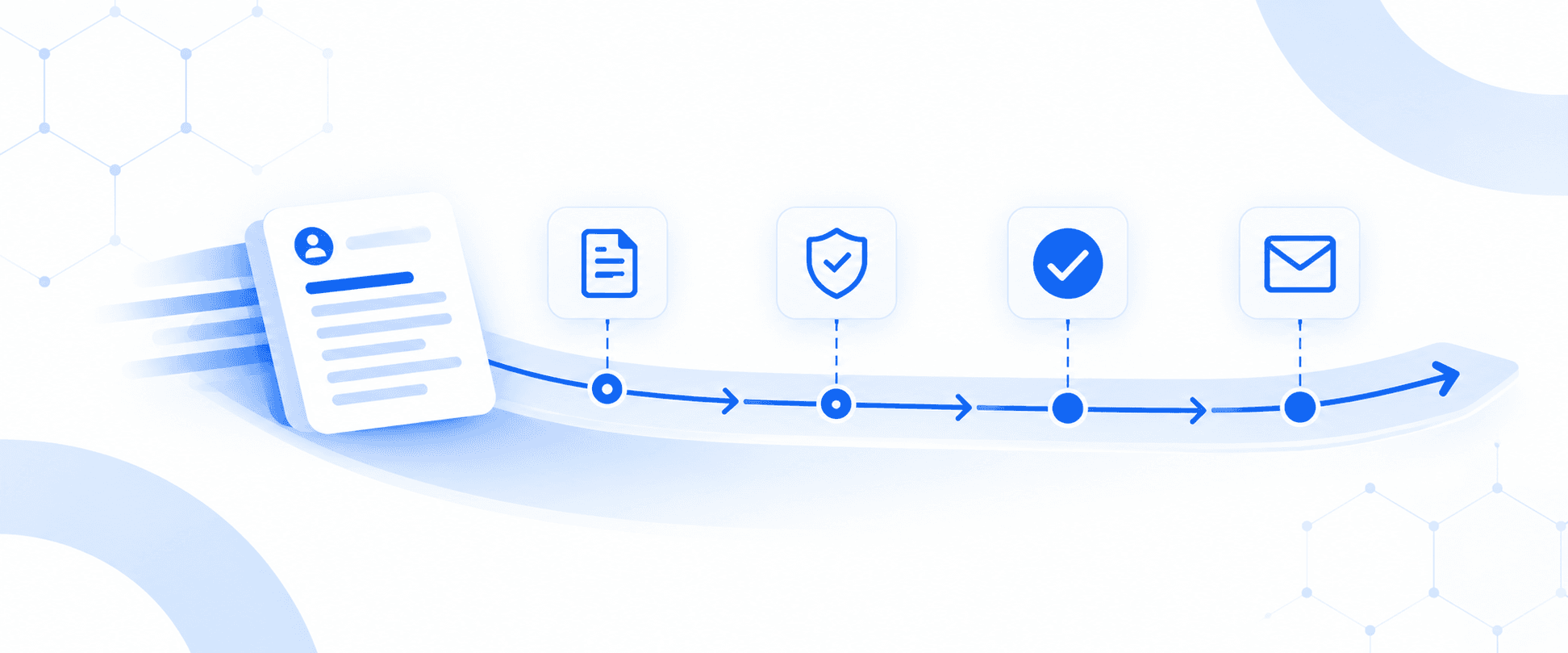
A member submits a loan application at 9:15 in the morning. By lunchtime, three different people have touched it, two of them have opened the same pay stub, and somebody has typed the member's employer name into a second system by hand.
Nothing in that sequence is unusual. Most of it is invisible to the member, who only knows that four days have passed and nobody has called.
This is the gap AI in credit union lending is actually built to close. Not the dramatic part, where a model decides who gets approved, but the unglamorous middle, where files sit in queues waiting for somebody to move them along.
Credit unions are already leaning in. Cornerstone Advisors' 2026 Banking Outlook found that 59 percent of credit unions have deployed generative AI, ahead of the 49 percent reported by community banks, and 66 percent plan to use AI specifically for credit decisioning.
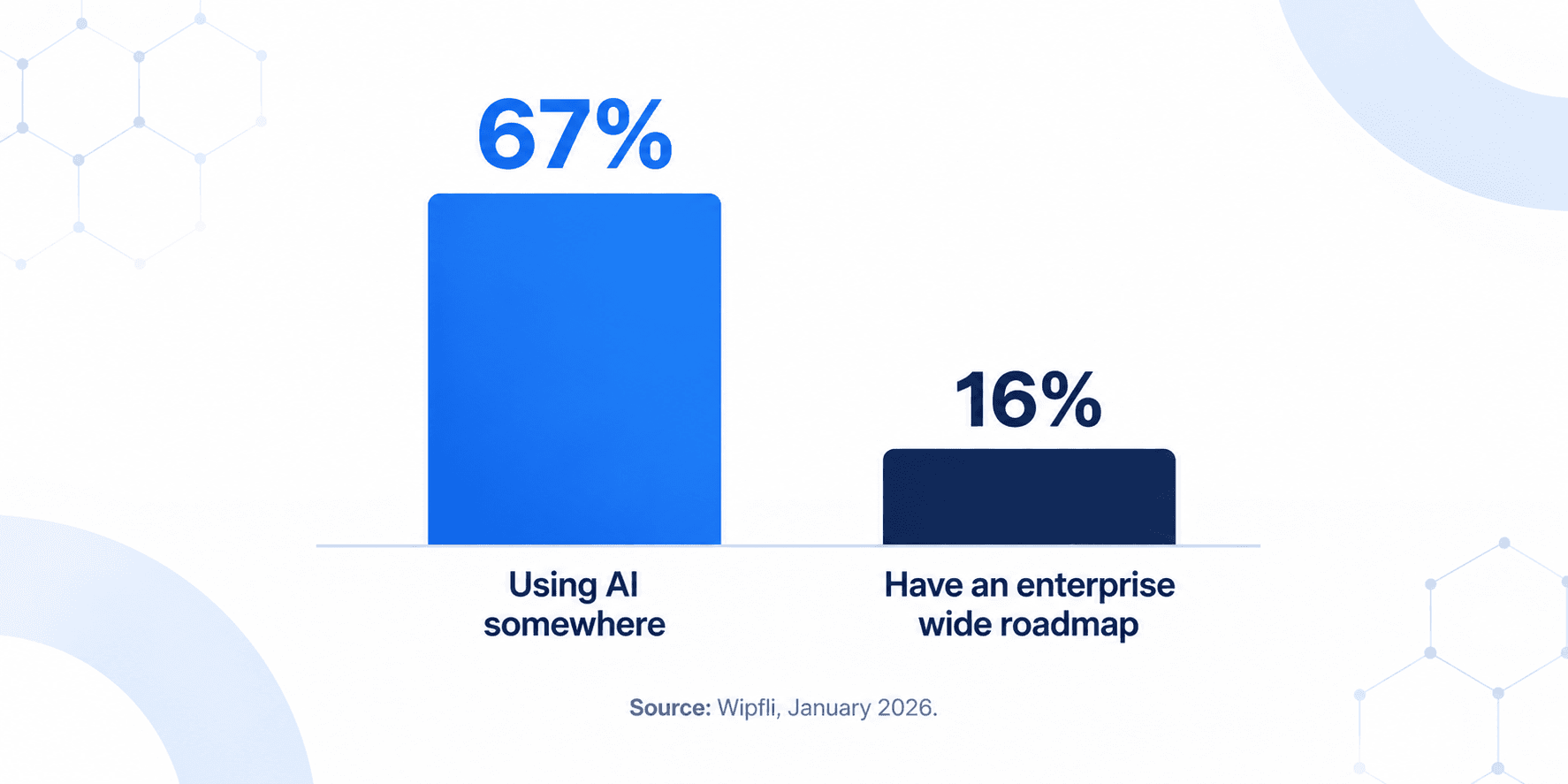
But Wipfli's January 2026 industry report found something else worth sitting with: while 67 percent of credit unions are using AI somewhere in the organisation, only 16 percent have an enterprise wide roadmap for it.
Adoption is not the problem anymore. Knowing where to point it is. Here are eight places in the origination journey where automation earns its keep, grouped by the stage of the file they sit in.
AI automation in loan origination means software handles the repeatable, rules driven parts of a loan file on its own: capturing data, reading documents, checking identity, applying credit policy, routing exceptions and updating the applicant. Humans keep the judgment calls, the unusual files and the conversations. The lending team sets the rules, and the platform executes them consistently across every submission.
That definition matters, because "AI powered lending" gets used to describe everything from a chatbot bolted onto a website to a decisioning engine an examiner will want to inspect. The eight items below are the practical version.
A member fills in income, employment, address and asset details online. Then somebody at the credit union retypes a portion of it into a core system or a spreadsheet, because the two platforms do not speak to each other.
Intelligent data capture removes that step. Information submitted by the member, along with whatever arrives attached to the application, gets extracted and mapped straight into the file without a second round of typing.
What this actually saves: duplicate entry, rekeying errors, and the twenty minutes of prep work that happens before anyone can begin reviewing the request on its merits.
Not every submission deserves the same treatment, and sorting them by hand is a poor use of an experienced lender's morning.
Automated eligibility checks compare the incoming request against criteria the credit union has already defined: loan amount, product rules, membership requirements, credit profile, income and existing debt obligations. The system is not making a final call here. It is answering a narrower question, which is what should happen to this file next.
Requests that clear the bar keep moving. Ones that need more information get flagged immediately rather than three days later, which is the difference between a quick follow up message and a frustrated member.
Paperwork is where lending slows down most reliably. Bank statements, tax forms, proof of address, income records: each one has to be identified, read, checked against what the member claimed, and confirmed as complete.
Intelligent document processing takes on the reading. The platform recognises what a file is, pulls the relevant figures from it, and compares them against the submitted application. Anything missing surfaces as a flag before the file moves forward.
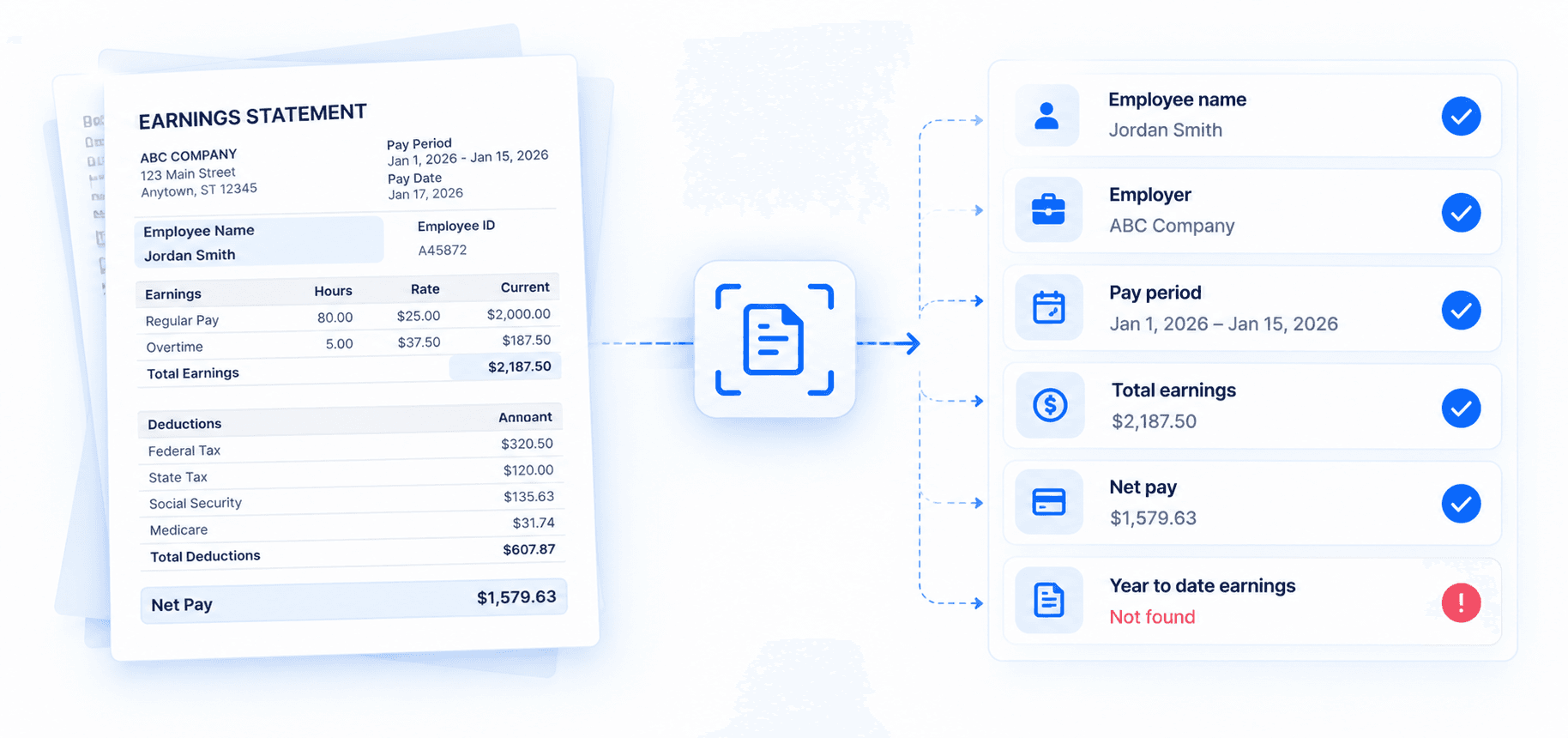
For lending staff, that means opening documents by exception instead of by default. For members, it means fewer of those messages asking for one more thing, sent one at a time, over the course of a week.
Curious what reading a document and flagging a gap looks like in practice? Take a quick walk through the https://demo.algebrik.ai/demo
Before money moves, the credit union needs confidence the applicant is who they claim to be. Traditionally this means a handful of separate tools and a person checking results across them.
Automated verification folds those checks into the same journey as everything else: identity confirmation, document authenticity, consistency between the data points, and known fraud signals. Deepfake driven fraud and synthetic identities have made this harder recently, which is precisely why the screening belongs inside the file rather than off to one side in its own tool.
The gain is not just speed. It is that a suspicious signal shows up next to the application it relates to, rather than in a report somebody reviews later.
This is the part everyone asks about, and it deserves a careful answer.
Automated credit decisioning does not mean handing approval authority to a model nobody can interrogate. It means the platform applies the credit policy your team wrote, against the data sources you chose, consistently, at whatever volume arrives. Straightforward requests clear on their own. Anything outside the defined parameters goes to a person.
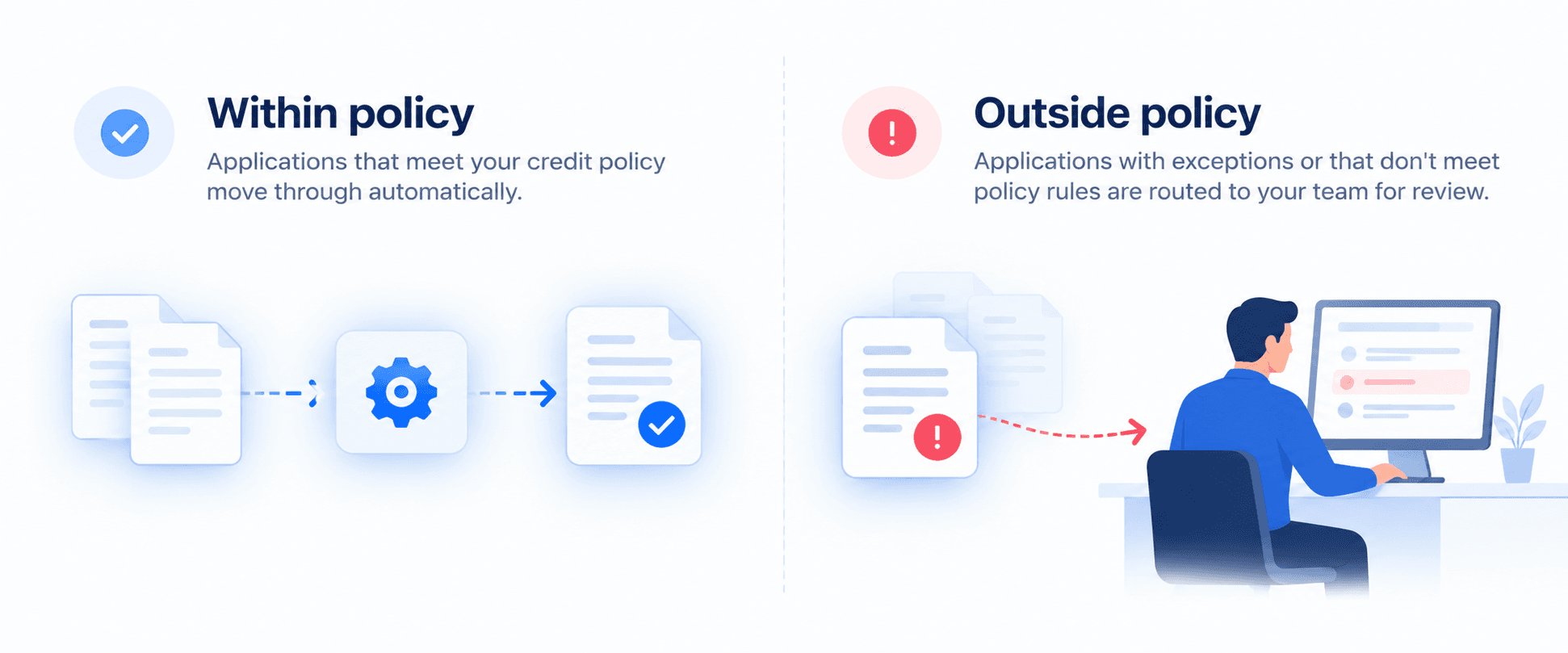
Governance is not optional here, and examiners have noticed. NCUA has not issued a standalone AI rule, but its January 2026 Supervisory Priorities letter named AI oversight as an examiner focus area, folded into the frameworks credit unions already answer to: fair lending review, third party due diligence and operational risk. Separately, the CFPB reaffirmed in 2026 that lenders using complex algorithms still owe applicants specific, accurate reasons for an adverse action. A decisioning engine that cannot explain itself creates a compliance problem regardless of how well it performs.
So the useful question is not how clever the model is. It is whether your team can explain, monitor and defend what it did.
Underwriting gets slow when a file arrives incomplete. The underwriter identifies what is missing, requests it, waits, reviews what comes back, and often repeats the cycle.
Automation compresses that loop. The platform identifies unmet conditions, triggers the request, tracks what has been satisfied, and presents the underwriter with a file that is ready to assess rather than one that needs assembling first.
The underwriter does not disappear. They just stop spending their day chasing.
Some files will never fit a standard path. Self employed income. Documentation that contradicts the application. A borrower whose circumstances sit just outside policy. These are exactly the files that deserve a human read.
The trouble is that finding them usually means reviewing everything. Automated routing inverts that: standard files keep moving, unusual ones get identified and sent to whoever is best placed to assess them, with the reason for the flag attached.
Think of it as traffic management for the lending pipeline. Nobody has to stand at the intersection directing every car.
Silence is the single most common complaint in consumer lending, and it is almost always accidental. Updates depend on somebody remembering to send them, and that somebody is busy.
Triggered notifications close that gap: confirmation on submission, requests when something is outstanding, progress updates as the file advances, and a clear next step at each stage. The messages fire off the status of the file itself, so they stay accurate without anyone maintaining them.
Members stop wondering. Staff stop answering the same question by phone.
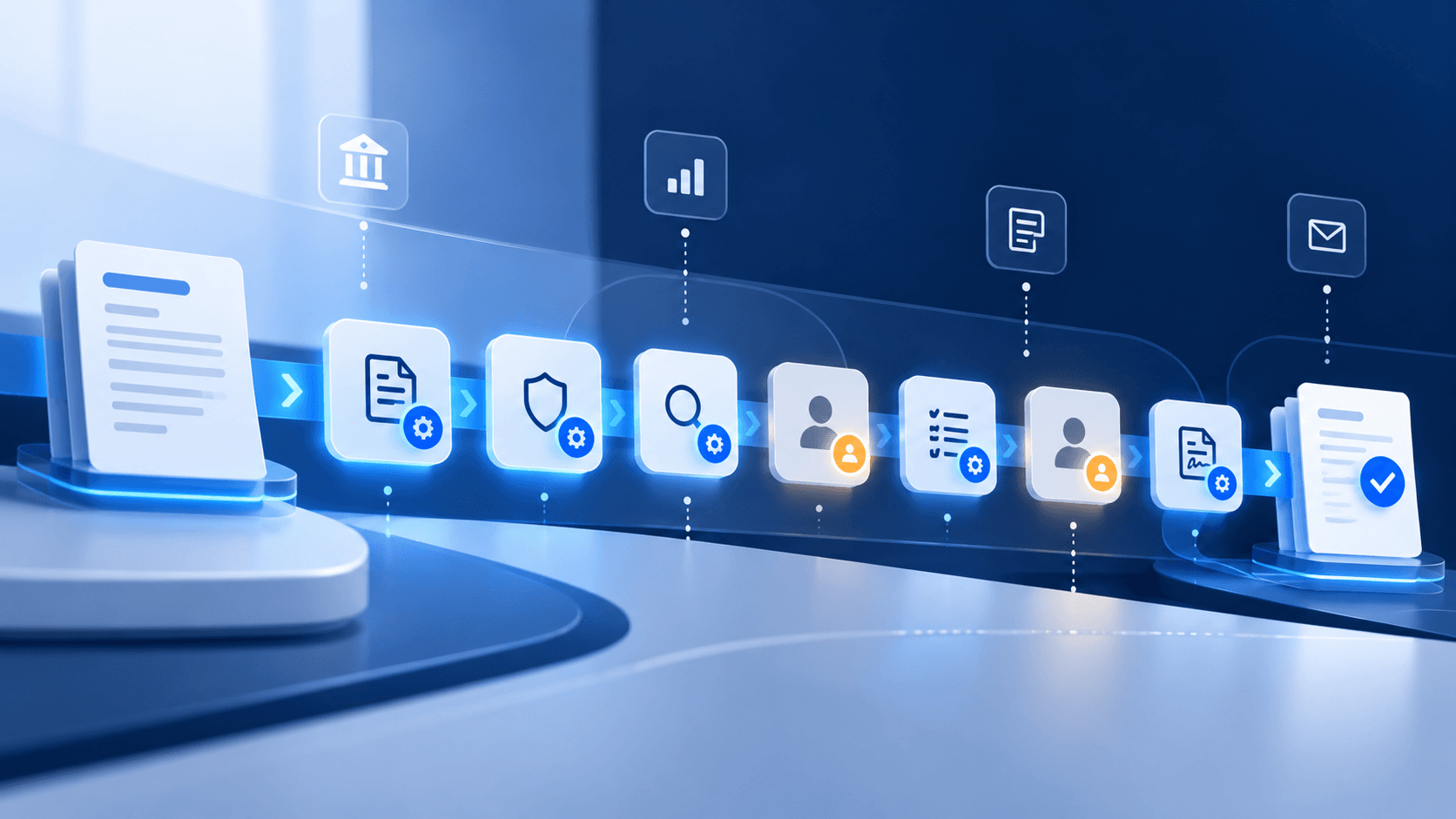
What the Connected Journey Looks Like
Automating one task produces a modest gain. Connecting them produces a different kind of result.
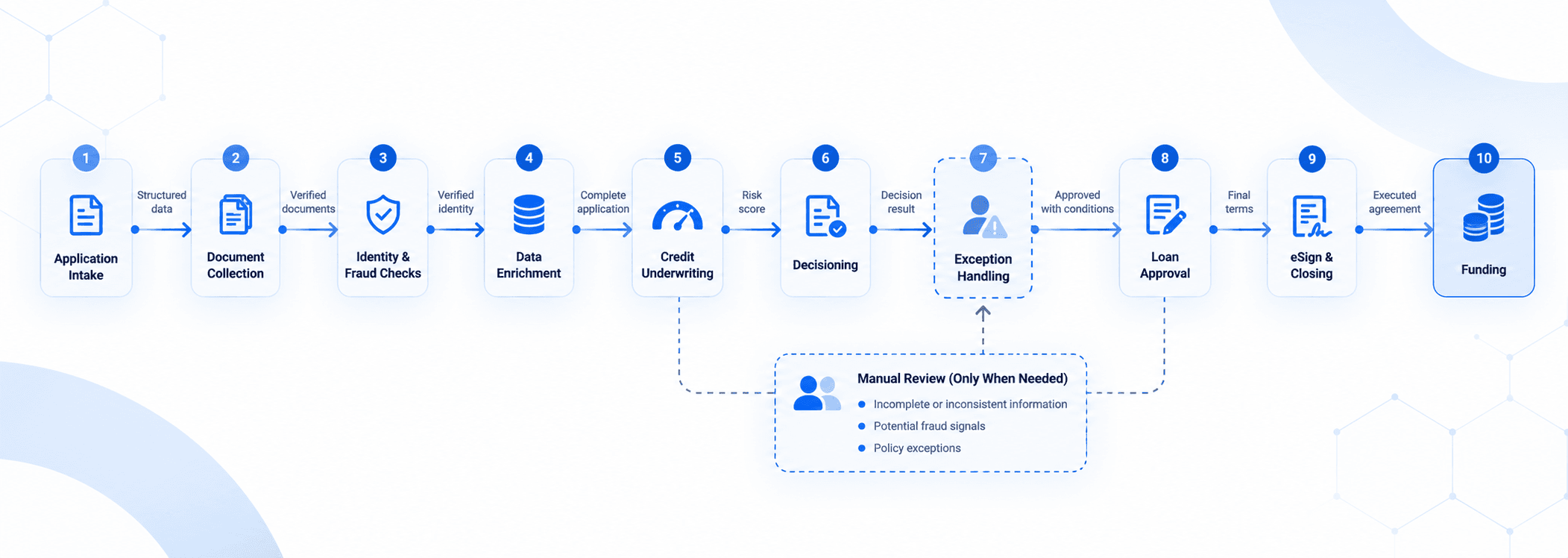
The value sits in the arrows. When information moves between stages without anybody carrying it, the file stops waiting on people and starts waiting only on genuine decisions.
Platforms built around this idea, such as suite, treat the whole journey as one flow instead of ten separate tools. The product tour shows how the handoffs work: https://demo.algebrik.ai/demo
Nobody automates all eight at once, and trying to usually stalls. A better filter is to look for work that is:
High in volume. If your team performs the same task several hundred times a month, small time savings compound into something real.
Genuinely repeatable. Identical checks, identical data entry, identical document reviews. If the task changes every time, it is not a first candidate.
Rule governed. If a clear policy already determines what happens next, software can apply it. If the answer depends on interpretation, keep a person there.
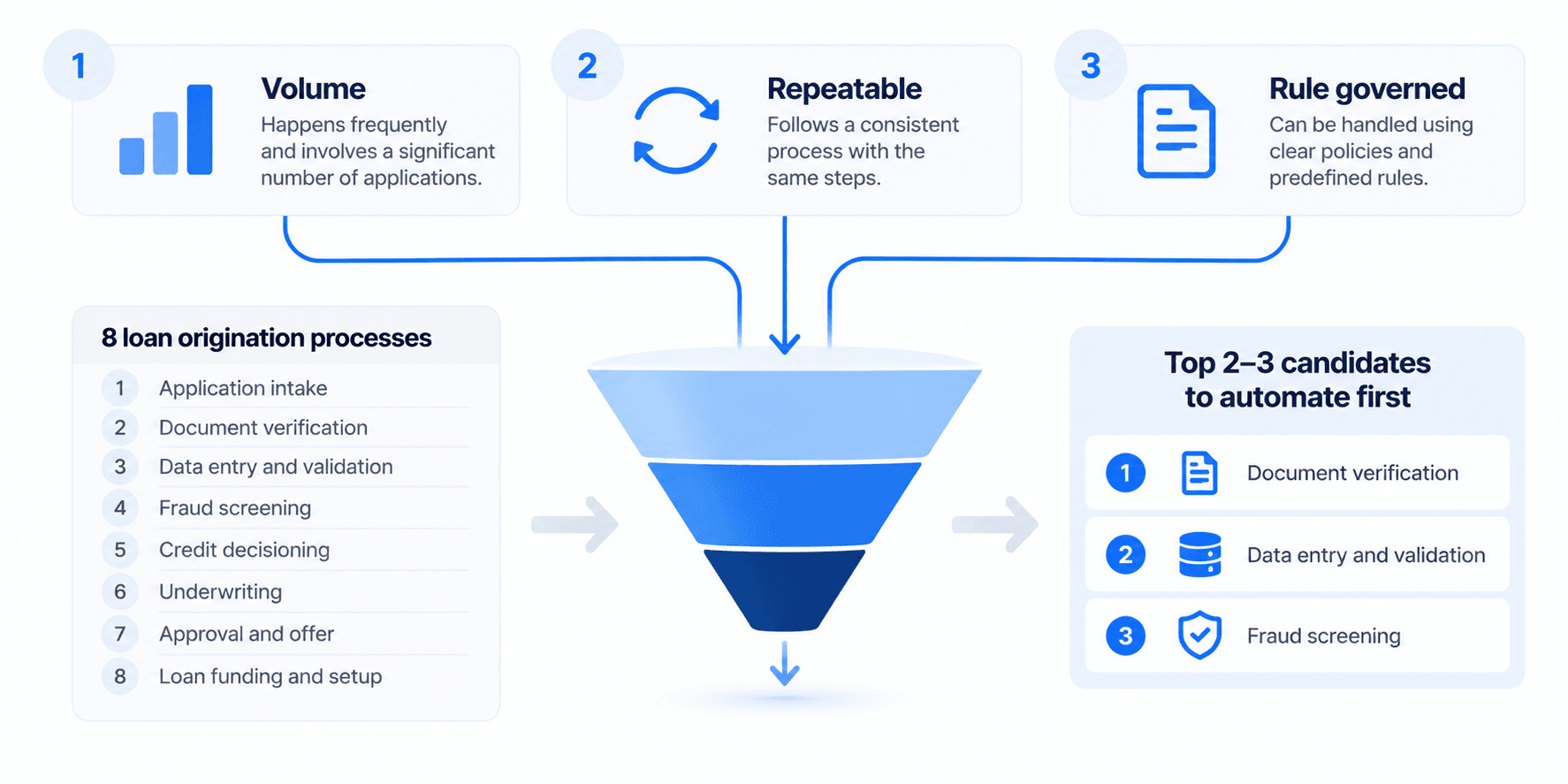
By that test, most credit unions find their first wins in document processing and status communication, not in decisioning. Those two are high volume, highly repeatable, and largely invisible to credit risk, which makes them easier to prove out internally.
No, and the framing is off. The better question is which parts of a loan officer's day actually require a loan officer.
Reading an unusual file does. Talking a member through a difficult financial situation does. Deciding whether a borrower whose circumstances sit outside policy still deserves a yes definitely does.
Copying an employer name between two systems for the fifth time does not.
Credit unions do not need AI to do everything. They need it to do the specific things that currently consume hours without requiring expertise.
Capture the data once. Read the documents automatically. Route the odd files to the right person. Keep members informed without anyone writing the message. Those four alone change what a lending week feels like.
Algebrik built its cloud native loan origination suite around exactly that idea, connecting digital account opening, document processing, point of sale, member verification, AI powered decisioning, application management, borrower communication, portfolio analytics and AI lender enablement into one continuous journey rather than a set of tools that each need supervising.
Because the goal was never a faster queue. It was giving lending teams their attention back for the part of the job that still needs a person sitting across from a member.
See how the full journey comes together in the https://demo.algebrik.ai/demo
Frequently Asked Questions
What loan origination processes can AI automate?
AI can help automate several parts of loan origination, including application data capture, eligibility checks, document processing, identity verification, credit decisioning, underwriting workflows, exception routing, and borrower communication.
How does AI automate loan origination?
Can AI automate loan underwriting?
Can AI make lending decisions?
How does AI help with loan document processing?
What is AI-powered loan origination?
Will AI replace loan officers?
Ready to get started?
More Blogs

Blog
Computerized Loan Origination: How Technology Transformed Lending

Blog
Loan Origination System Requirements: A Checklist Before You Buy

Blog
Consumer Finance Systems: Why Unified Platforms Win Over Fragmented Stacks