 ‹ All Blogs
How AI Is Improving the Member Experience in Credit Union Lending
It's 9:40 on a Tuesday night. Someone is sitting in a dealership parking lot wit...

It's 9:40 on a Tuesday night. Someone is sitting in a dealership parking lot with a phone in hand, trying to finish a car loan application before the salesperson comes back with the paperwork. The form asks for the same details twice. A document upload fails. Nobody picks up the phone, because the branch closed hours ago.
Now picture the same night with a different ending. The application is short, the documents get read the second they're uploaded, an answer arrives while the person is still in that parking lot, and a text spells out what happens next.
The distance between those two evenings is the whole story of AI in credit union lending. It has very little to do with robots replacing loan officers. It's about removing the waiting, the repeating and the guessing that make borrowing feel harder than it needs to be.
So let's walk through how AI is improving the member experience in credit union lending, what the latest numbers say, where staff still matter most, and how to start without rebuilding everything at once.
Quick answer: AI improves the member experience in credit union lending by speeding up decisions, cutting paperwork through automated document review, tailoring offers to the person, keeping borrowers informed at every stage, and catching fraud quietly in the background. All of that frees loan officers to spend their time on the conversations that build loyalty.
- What member experience really means in lending
- Why expectations keep climbing
- Seven ways AI is improving the journey
- Will AI cost you the human touch?
- How to get started without a big bang rollout
- Try it yourself
Member experience is everything a person goes through while borrowing from you: finding the right product, applying, uploading paperwork, waiting for an answer, signing, getting funded, and calling with questions afterward. It's the entire journey, not a single screen.
Credit unions start with a real advantage here. Anyone borrowing from a cooperative is also an owner, so they expect a little more warmth than a giant bank ever offers. The catch is that those same owners carry a smartphone, and they don't compare your process with the credit union down the road. They compare it with the best app they touched that week.
Because everyone else moved. A few numbers show how quickly the ground is shifting:
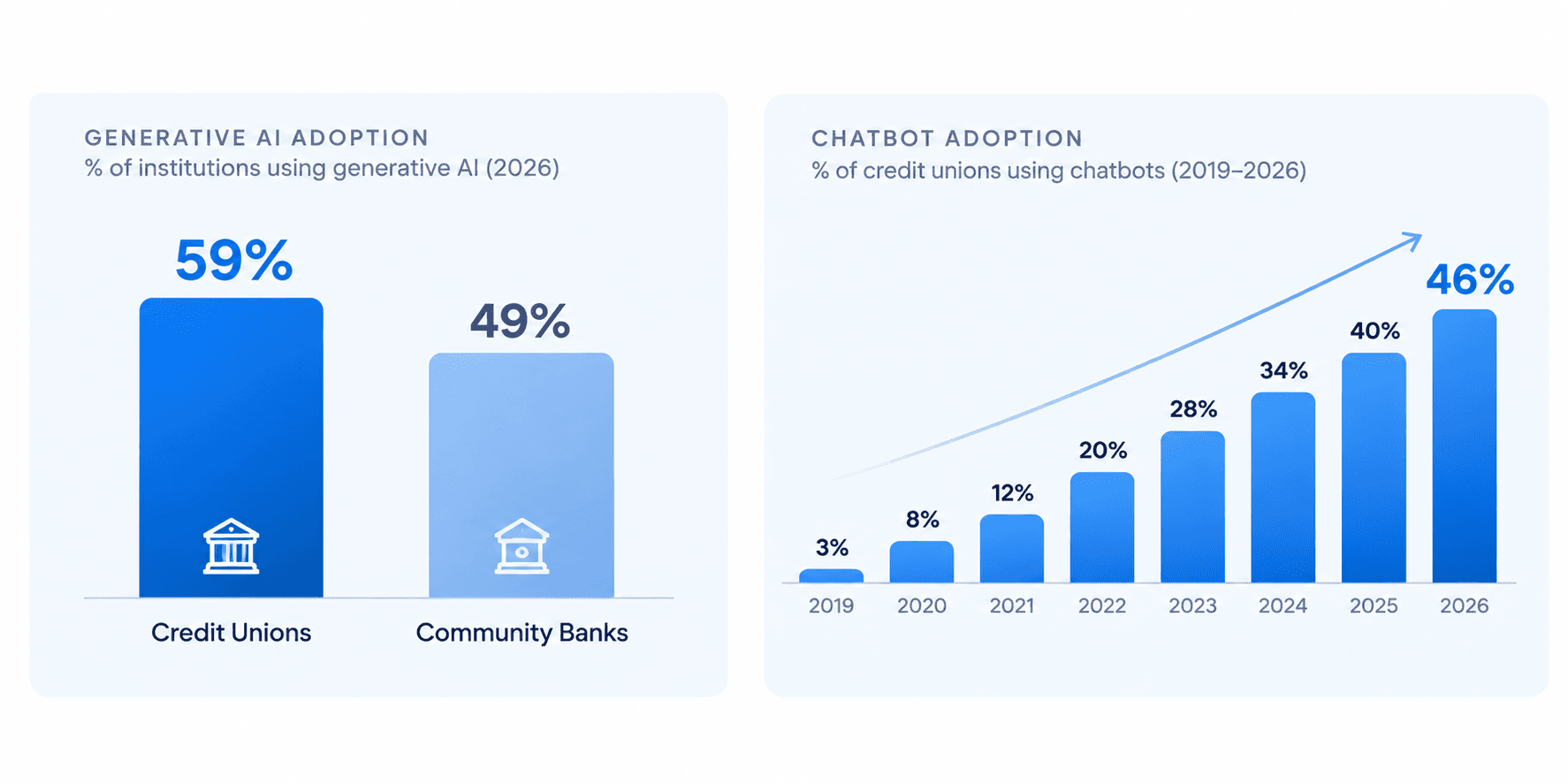
- Cornerstone Advisors' 2026 banking report found that 59% of credit unions have deployed generative AI, against 49% of community banks.
- PYMNTS Intelligence research shows chatbot adoption at credit unions climbing from 3% in 2019 to 46% in 2026.
- Wipfli's 2026 State of the Credit Union Industry report found that 67% are putting AI to work somewhere, yet only 16% have a roadmap that covers the whole organization.
That last figure deserves a pause. Plenty of institutions are experimenting, but far fewer have a plan. And the plan is where the experience actually improves, because a friendly chatbot on your website won't help much if the application behind it still takes three days.
The stakes are real, too. America's Credit Unions reported this August that AI forward credit unions grew membership nearly three times faster in 2025 than peers watching from the sidelines. The same coverage highlighted a 2026 finding that account holders who had already left a credit union were 122% more likely than average to want AI chat support. They didn't walk away over rates. They walked away because something they wanted was missing.
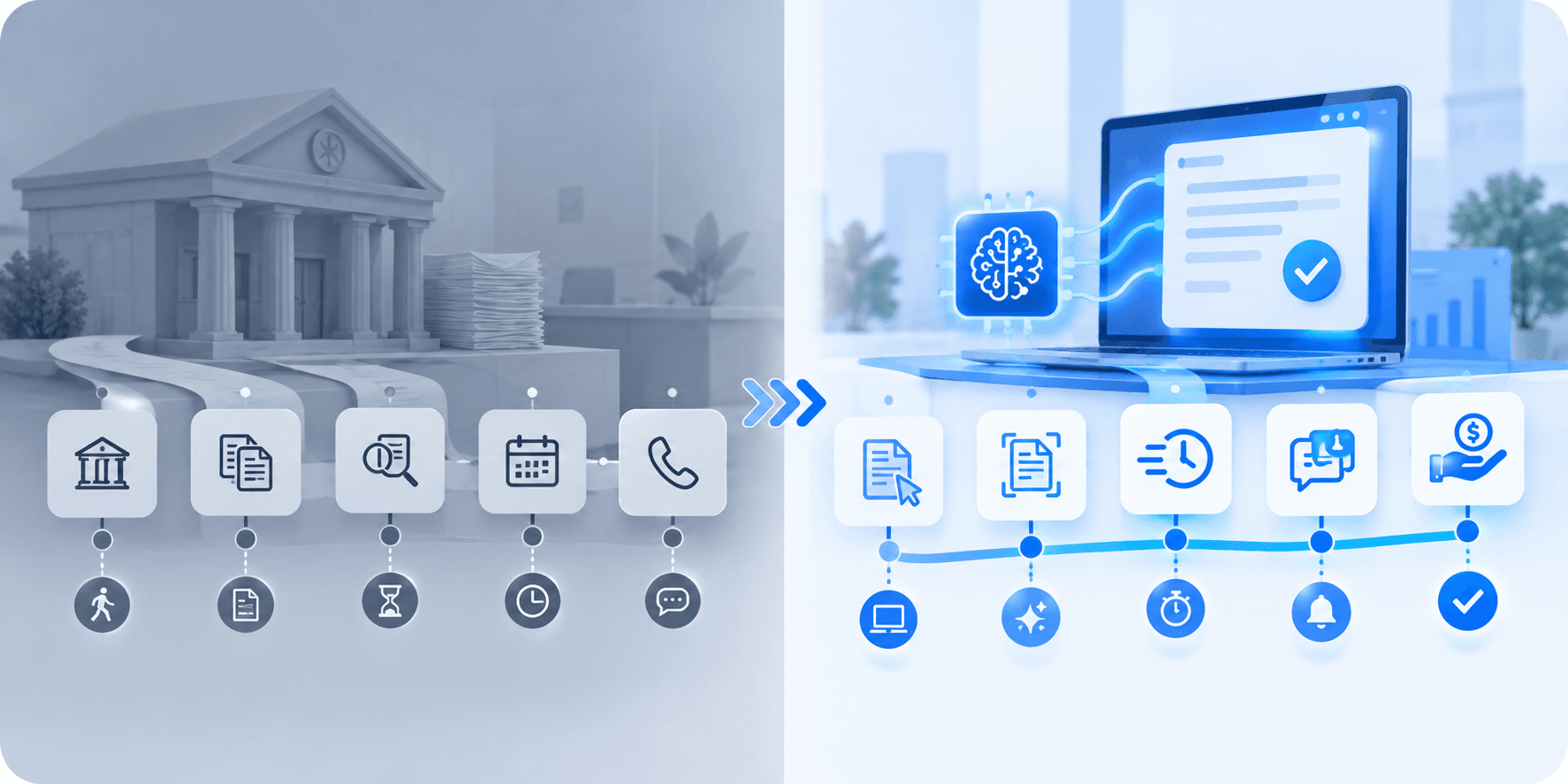
Manual underwriting has long meant a wait of one to three business days, sometimes longer. For someone standing in a showroom or staring at a repair bill, that's forever.
Automated loan decisioning changes the math. AI checks credit data, income and application details against your lending policy, approves the clear cases right away and sends the tricky ones to a person. Centris Federal Credit Union, for example, moved its automated auto loan decisions from 43% to 63% after adopting AI underwriting in 2024, and its lending team described quicker answers to dealers as a win for everybody involved.
That's the thinking behind AI powered Decisioning in the Algebrik suite: give the borrower a fast answer, and give the lender a clean, well organized file when a human needs to step in.
Digital onboarding is where many applicants quietly give up. If opening an account and asking for a loan feel like two separate chores, with the same ID and address typed twice, some folks won't come back.
NAFCU has noted that letting applicants pause, then pick things up later on a different device, is now a basic requirement rather than a bonus. AI supports that by verifying identity in the background so nobody waits days for a green light. Tools like Algebrik's Digital Account Opening and Member Verification are built to keep the path from "I'd like to join" to "I'd like to borrow" continuous.
Pay stubs, bank statements, driver's licenses, purchase agreements. Collecting and checking them by hand is exactly where good applications slow to a crawl.
AI powered document processing reads whatever is uploaded, pulls out the key details, cross checks them against each other and flags anything that doesn't line up, all before the borrower senses a delay. FORUM Credit Union in Indiana reported roughly 70% faster loan processing after AI took over document review for its auto dealer channel. Faster processing simply means money reaches someone's hands sooner.
Algebrik's Document Processing is built for this job, taking the reading, matching and flagging off your team's plate.
Generic rate sheets are fine, but everyone can tell when advice was written with them in mind. AI can study loan history, income patterns and spending behavior to suggest the product that suits someone's situation, whether that's a small starter loan or a refinance that saves real money.
It also changes what happens after a decline. Instead of a cold rejection, AI can explain the reasons in plain language and suggest steps that might help someone qualify next time. A flat "no" becomes "not yet," and that difference keeps relationships alive.
Behind the scenes, Algebrik's Portfolio Analytics helps leaders see how the portfolio is performing so offers can be tuned over time.
Silence is the most common complaint in lending. NAFCU has pointed out that consumers now expect live visibility into application status, and they'd like funding in minutes rather than days.
AI driven messaging keeps everyone posted, answers routine questions at any hour and nudges applicants when a file is missing instead of letting the file gather dust. Algebrik's Borrower Communication feature is designed for that kind of steady, timely contact.
Good security shouldn't feel like an interrogation. AI watches for unusual patterns, mismatched documents and suspicious applications in the background, so genuine applicants glide through while risky files get a closer look. That safeguards your credit union's finances and reputation, and it protects the trust your owners place in you.
Here's the payoff that often gets overlooked. When software handles data entry, paper chasing and routine questions, loan officers can do what they were hired to do: talk. About a first home, a business idea, a debt that feels heavy, a rough patch. Credit unions using AI for everyday tasks describe exactly this shift toward loan guidance, financial wellness and life milestones.
Algebrik's Lender's Cockpit gives lending teams one workspace to manage applications, so less time goes to hunting for information and more goes to helping. And if you're meeting borrowers where they shop, the Point of Sale module carries the same experience to the dealership or storefront.
It's a fair question, and the honest answer is: only if you let it. The best results come when AI handles speed and consistency while people handle judgment and empathy.
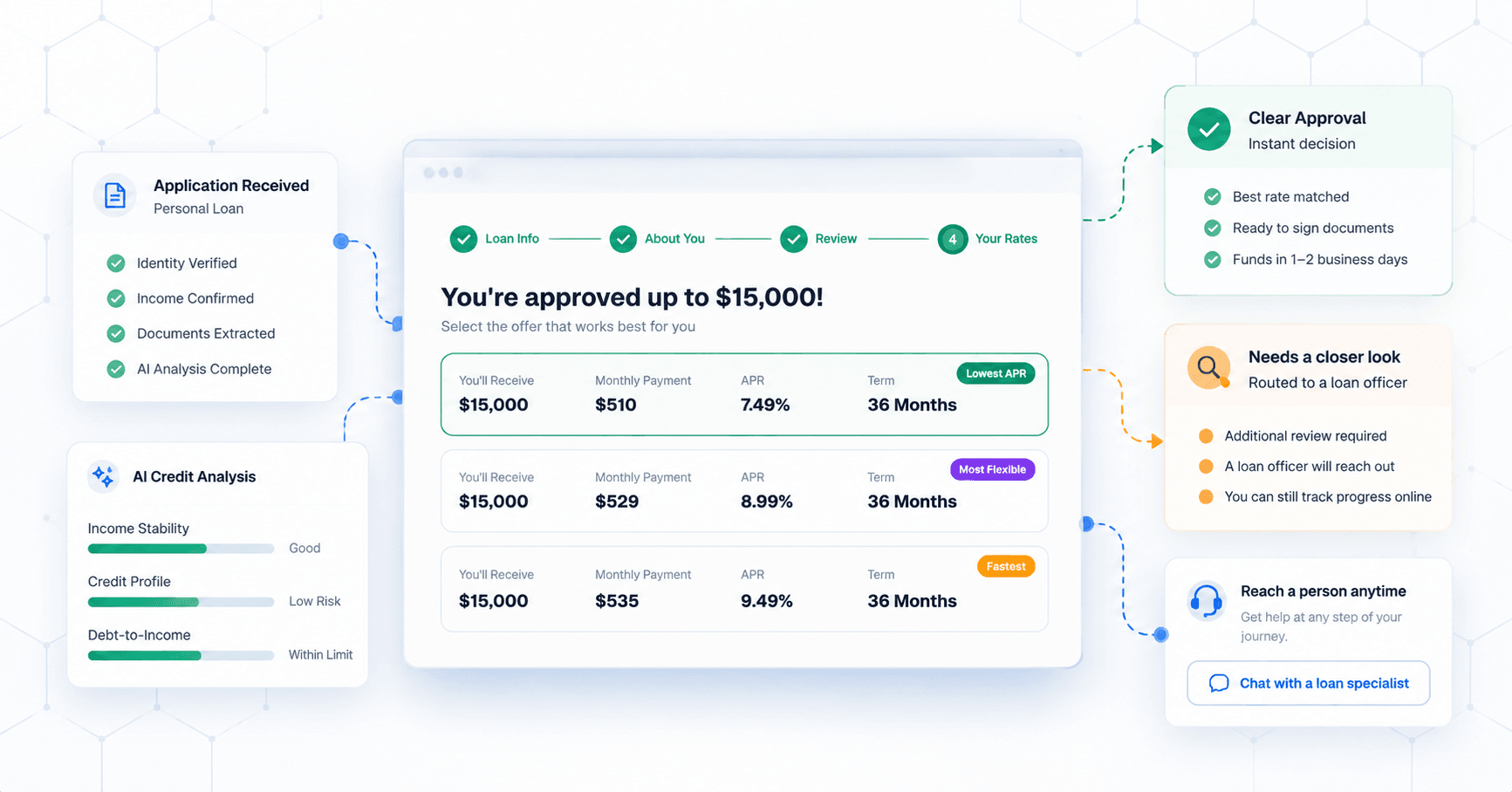
Some decisions simply feel better with a person behind them. Credit union technologists have pointed out that very large loans are a good example, since customers are often more comfortable knowing a colleague made the final call. So build handoffs into the design. Clear approvals happen instantly, unusual cases go to a person, and the borrower always knows how to reach a human being.
Trust is an asset you already own. A recent survey found that 85% of respondents still view credit unions as good sources of financial advice, and 63% said they'd attend AI education classes if their credit union offered them, up from 51% in 2023. Owners are curious and open. They mostly want to be told what's happening and why.
Fairness matters just as much as friendliness. Fintech platform Conductiv advises credit unions budgeting for AI powered lending to fund model governance, fair lending controls and plain language communication at the same time. In other words, treat explanations and oversight as part of the product, not as paperwork for later.
You don't need to replace everything on a Monday. Most teams that do well start small and build momentum.
- Find the biggest friction point. Study where applications stall or get abandoned. Then ask your loan officers what they hear complaints about most often. They already know.
- Fix the workflow before adding the chatbot. A polished front door doesn't help if the back office still runs on email attachments and rekeyed data.
- Choose a platform that connects the pieces. Disconnected tools create disconnected experiences. Aim for one continuous origination process, from account opening through decisioning to funding.
- Agree on rules for review and handoffs. Bring compliance in early, and decide in advance which situations always go to a person.
- Measure what borrowers feel. Track time to decision, time to funding, drop off rates and satisfaction scores, then share the results with your team.
- Talk openly with your owners. Tell them what you're doing and why. A short note explaining faster decisions goes a long way.
Pro tip: Pick one loan type, such as auto or personal loans, for your first pilot. Smaller scope means faster learning and an easier story to tell your board.
Reading about it only takes you so far. Algebrik offers a personalized, interactive product tour that shows the platform dressed in your credit union's own brand and colors, so you can picture how it would look and feel to your own borrowers.
It takes a few minutes, and there's nothing to install.
Still have questions about anything in this article? Whether it's about decisioning, digital onboarding or how a rollout might work for a credit union your size, reach out directly at aditya.bajaj@algebrik.com and we'll be glad to talk it through.
Borrowers don't judge a credit union by how much technology sits behind the scenes. They judge it by how the experience feels: quick, clear, fair and personal. AI helps deliver that feeling by trimming the waiting, the paperwork and the uncertainty, while giving your team more time for the human moments that made people join in the first place.
You don't have to do it all at once. Pick a single pain point, try a better way and let the results guide your next step. When you're ready to see one possible path, take the product tour at https://demo.algebrik.ai/demo.
Frequently Asked Questions
How is AI used in credit union lending?
AI supports several stages of the lending journey: reviewing applications and making faster credit decisions, reading and verifying documents, spotting fraud, answering questions through chat or messaging, and suggesting products that suit each borrower. It handles repetitive work so staff can focus on advice.
Does AI really make loan approvals faster?
Will AI replace loan officers at credit unions?
Is AI lending fair and safe for borrowers?
What should a credit union look for in AI lending software?
Ready to get started?
More Blogs

Blog
Computerized Loan Origination: How Technology Transformed Lending

Blog
Loan Origination System Requirements: A Checklist Before You Buy

Blog
Consumer Finance Systems: Why Unified Platforms Win Over Fragmented Stacks